
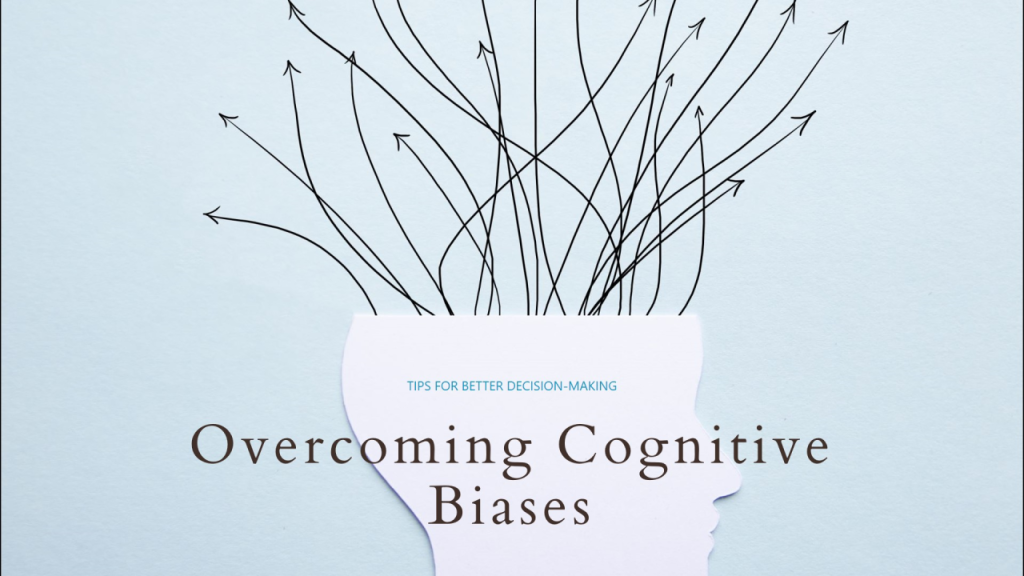
Mastering Decision-Making: Overcoming Biases That Cloud Your Judgment
Making decisions is an integral part of daily life, but what happens when cognitive biases subtly manipulate your choices? In the article “12 Common Biases That Affect How We Make Everyday Decisions” from Psychology Today, we learn that even the most rational thinkers are not immune to these mental shortcuts. Let’s explore how understanding these biases can help you improve your decision-making and break free from their influence.
What Are Cognitive Biases?
Cognitive biases are unconscious errors in thinking that occur when our brain tries to simplify information processing. While they help us make quick decisions, they often lead to systematic errors that cloud our judgment. Biases like confirmation bias—seeking information that supports what you already believe—and the anchoring effect, where you rely too heavily on the first piece of information you encounter, are just two examples of how our minds play tricks on us.
Why Do Cognitive Biases Matter?
Whether you’re deciding on a career move, choosing between investment options, or simply figuring out what to eat for dinner, these biases can have a profound impact. For example:
• Confirmation Bias: This bias might cause you to dismiss valuable perspectives, limiting your ability to see all sides of an argument.
• Availability Heuristic: You might overestimate the likelihood of events simply because they are more memorable or recent.
By recognizing these patterns, you can take steps to counteract them and make better, more informed decisions.
How to Overcome Cognitive Biases in Decision-Making
The good news is that you can train yourself to identify and reduce the impact of cognitive biases. Here are some actionable strategies:
1. Pause and Reflect: Before making a decision, ask yourself if you’re relying on assumptions or jumping to conclusions.
2. Seek Diverse Perspectives: Consult people with different experiences and viewpoints to challenge your own biases.
3. Embrace Data: Use objective data to support your decision, especially in high-stakes scenarios.
4. Practice Mindful Decision-Making: Cultivate awareness of your thought processes to make more intentional choices.
Real-World Applications of Bias Awareness
Understanding cognitive biases can enhance decision-making across various domains, including:
• Career Decisions: Avoid falling into the trap of sunk cost fallacy—continuing a job or project solely because you’ve already invested time or resources.
• Personal Development: Cultivate emotional intelligence to recognize when biases are shaping your responses to challenges.
• Leadership: As a leader, identifying biases can help you foster a more inclusive, balanced, and innovative workplace.
The Bottom Line: Think Smarter, Live Better
Cognitive biases are an inevitable part of human nature, but they don’t have to dictate your decisions. By becoming aware of these mental shortcuts and employing strategies to counteract them, you can make more deliberate and informed choices.
Embrace the power of self-awareness and take control of your decision-making process. Remember, overcoming cognitive biases isn’t about eliminating them completely—it’s about recognizing their influence and consciously choosing to rise above them.
Keywords : decision-making psychology, cognitive bias, confirmation bias, decision-making strategies, mindful decision-making, overcoming biases, personal development, emotional intelligence, career decision-making, leadership decisions.